

Building the Wooden Clock
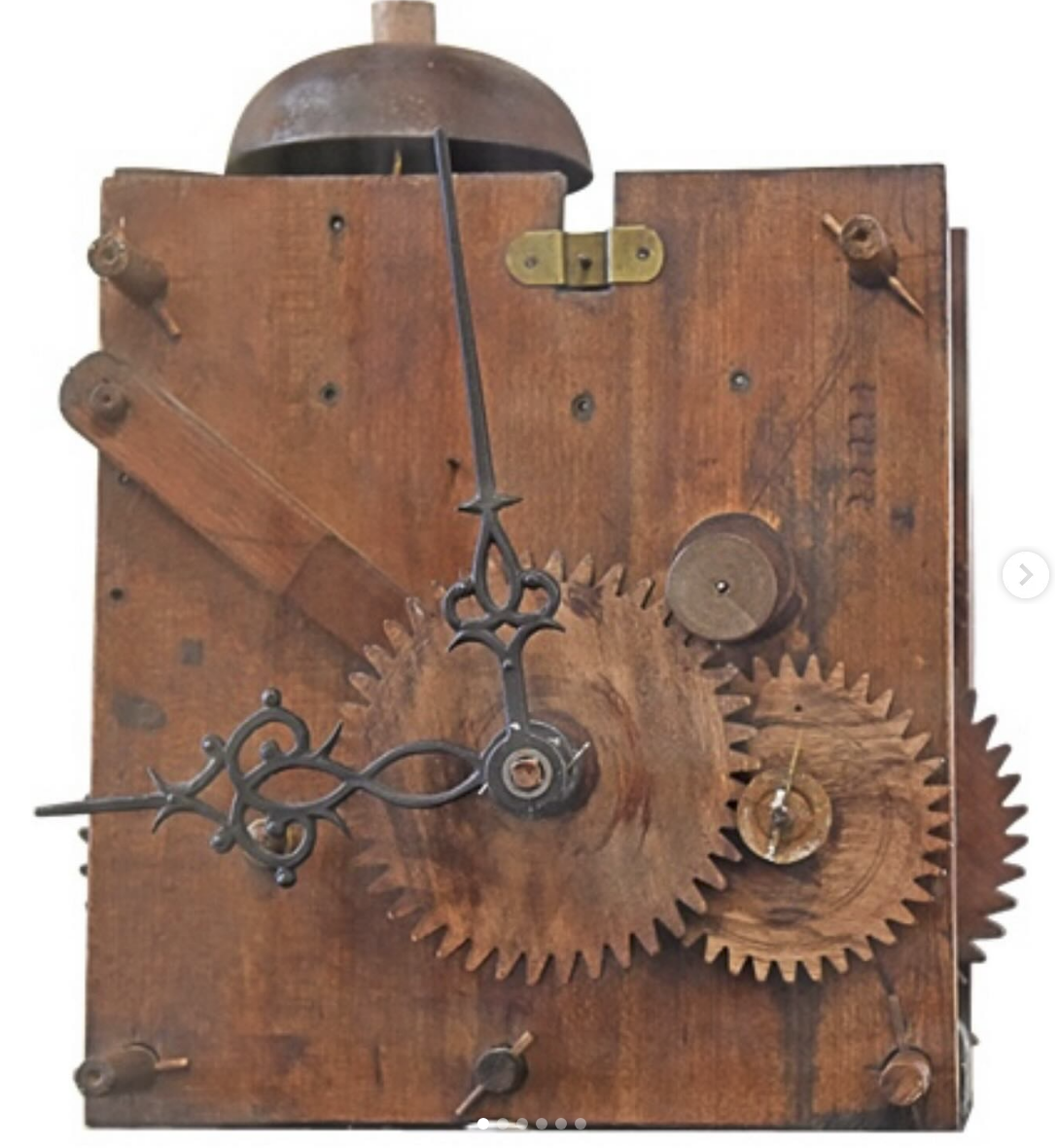
One of Benjamin Banneker’s most famous achievements was the construction of a large wooden clock during the early 1750s. At a time when clocks were rare, expensive, and usually imported from Europe, Banneker successfully designed and built a functioning striking clock almost entirely out of wood.
According to historical accounts, Banneker carefully studied the inner workings of a pocket watch borrowed from a neighbor or acquaintance. He observed how the gears moved together and measured each component with great precision. Using these observations, he carved larger wooden versions of the gears and mechanisms by hand.
The clock reportedly kept accurate time and continued operating for more than forty years. This accomplishment was extraordinary because Banneker had no formal engineering training or access to advanced mechanical tools.
The Engineering Process
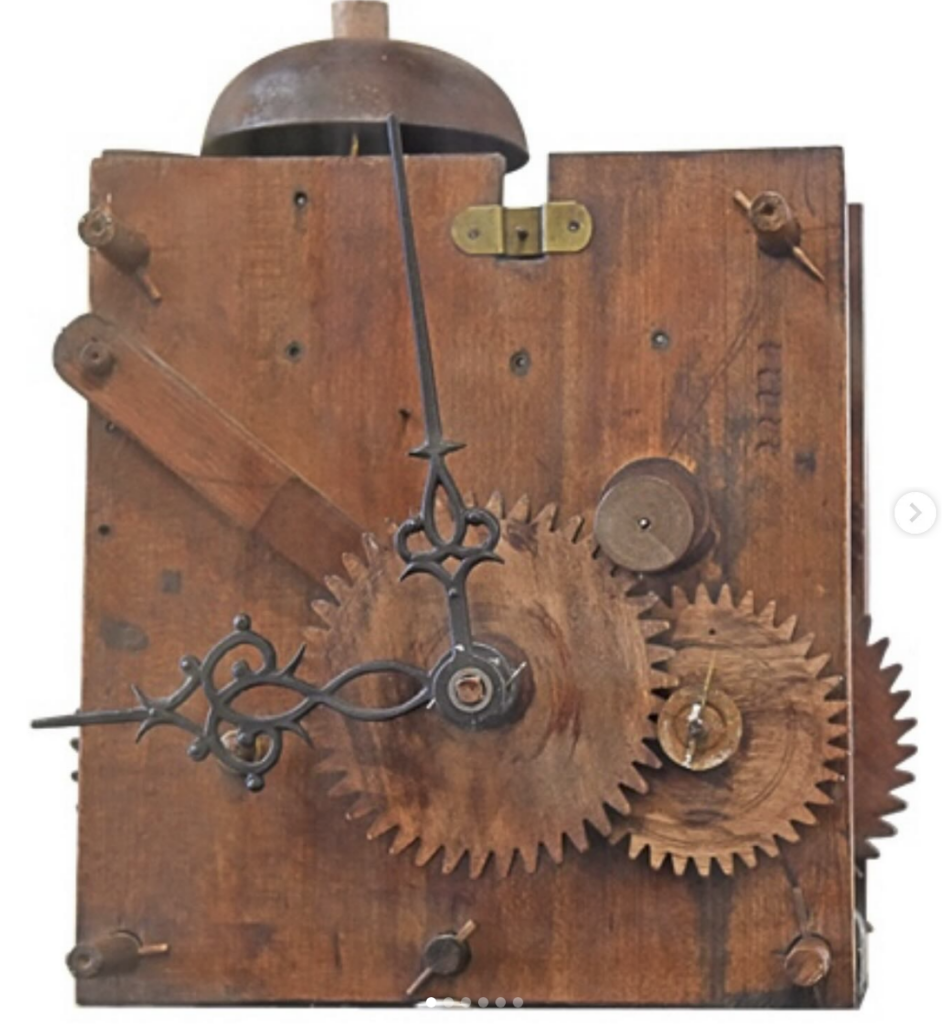
Constructing a working clock required advanced understanding of mathematics, measurement, and mechanics. Banneker had to calculate the exact sizes and relationships between gears so that the clock could accurately measure time.
He used woodworking tools to carefully shape each piece by hand. The gears had to fit together perfectly in order for the mechanism to move smoothly. Even a small mistake in measurement could prevent the clock from functioning correctly.
The clock included a striking mechanism that sounded at regular intervals, similar to traditional clocks of the period. Building such a machine required patience, problem-solving skills, and careful attention to detail.
Why the Clock Was Important
The wooden clock built by Benjamin Banneker was important for several reasons beyond simply telling time.
First, it demonstrated Banneker’s extraordinary intelligence and engineering ability. During the eighteenth century, clocks were considered advanced mechanical technology. Building one required precise measurements, understanding gears and mechanics, and careful craftsmanship. Banneker reportedly studied a small pocket watch and then created a much larger working clock almost entirely out of wood. This showed his ability to learn complex ideas independently without formal training.
Second, the clock established Banneker’s reputation in his community. People were impressed that he could design and build such a sophisticated machine by hand. The clock reportedly worked accurately for more than forty years, which made his accomplishment even more remarkable.
The clock was also important because it represented self-education and innovation. Banneker had limited access to schooling due to racial discrimination in colonial America. Despite these barriers, he taught himself mathematics, mechanics, and science through observation and experimentation. His success proved that intelligence and creativity were not limited by race or social status.
In addition, the clock helped prepare Banneker for his later work in astronomy and mathematics. Accurate timekeeping was essential for observing stars, predicting eclipses, and making scientific calculations. The mechanical and mathematical skills he developed while building the clock supported many of his future achievements.
Today, the wooden clock remains an important symbol of perseverance, curiosity, and African American achievement in early American history.