

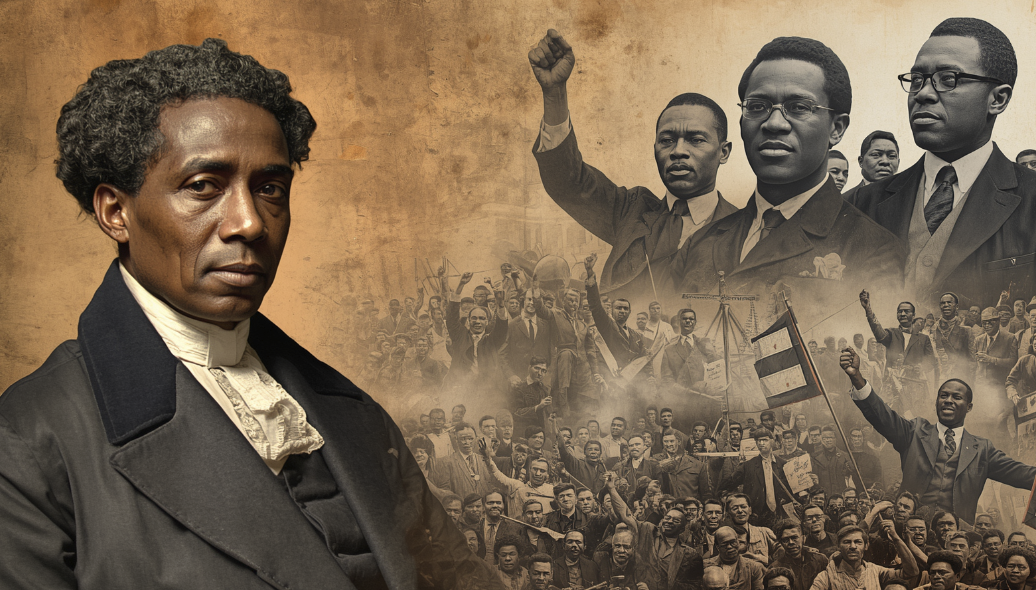
Although Benjamin Banneker is widely remembered for his achievements in astronomy and mathematics, he was also an important voice against slavery and racial injustice during early American history. Living in a society shaped by slavery and discrimination, Banneker used education, science, and writing to challenge racist beliefs and defend the equality of African Americans.
His most famous contribution to the fight for equality was a letter he wrote to Thomas Jefferson in 1791. In this letter, Banneker urged Jefferson and other leaders of the United States to recognize the humanity and intellectual abilities of Black people.
Racism in Early America
During the eighteenth century, slavery was deeply rooted in American society. Millions of African Americans were enslaved and denied basic human rights, freedom, education, and political participation.
Many white Americans believed false racist ideas claiming that Black people were intellectually inferior. These beliefs were often used to justify slavery and discrimination.
Although Benjamin Banneker was born free, he still faced prejudice and limited opportunities because of his race. Despite these barriers, he became a respected scientist and mathematician whose accomplishments directly challenged racist stereotypes.
Banneker’s success proved that intelligence and talent were not determined by race.
The Letter to Thomas Jefferson
In 1791, Banneker wrote a powerful letter to Thomas Jefferson, who was serving as Secretary of State and was one of the authors of the Declaration of Independence.
Banneker criticized the contradiction between America’s ideals of liberty and the existence of slavery. He reminded Jefferson that the Declaration of Independence stated that “all men are created equal,” yet African Americans continued to suffer oppression and injustice.
Along with the letter, Banneker sent a copy of his almanac containing his astronomical calculations. This demonstrated his scientific abilities and challenged racist assumptions about African Americans.
Excerpts from the Letter
Example Excerpt 1
“We hold these truths to be self-evident, that all men are created equal.”
Banneker referenced Jefferson’s own words from the Declaration of Independence to point out the hypocrisy of supporting freedom while slavery continued to exist.
Example Excerpt 2
“You should at the same time counteract those mercies which you have received.”
In this section, Banneker encouraged Jefferson to act with compassion and justice toward enslaved African Americans.
Example Excerpt 3
“The Father of mankind hath afforded us all the same sensations.”
Here, Banneker argued that all human beings share the same emotions, intelligence, and humanity regardless of race.
Arguments for Equality
Banneker’s letter presented several important arguments for equality:
Equality of Intelligence
Banneker used his own scientific accomplishments as evidence that African Americans were fully capable of intellectual achievement.
Human Rights
He argued that freedom and dignity belonged to all people, not only white Americans.
Moral Responsibility
Banneker believed that leaders such as Jefferson had a moral duty to oppose slavery and injustice.
Religious and Ethical Values
He emphasized shared humanity and argued that all people were equal before God.
Abolitionist Ideas
Although Banneker was not formally part of the abolitionist movement that grew later in the nineteenth century, many of his ideas reflected early abolitionist beliefs.
Abolitionists opposed slavery and argued for:
- freedom,
- equality,
- education,
- and human rights for African Americans.
Banneker’s writings contributed to these ideas by demonstrating that African Americans could excel in science, literature, and intellectual life.
His letter became an important example of peaceful protest through education and reason.
Historical Analysis
Historians view Banneker’s letter as one of the earliest and most important public challenges to slavery written by an African American intellectual.
The letter was significant because:
- it directly confronted a powerful political leader,
- it used logic and moral arguments,
- and it connected American ideals to the issue of racial equality.
Banneker’s scientific reputation strengthened his argument. By publishing almanacs and performing advanced calculations, he disproved racist claims about Black intellectual inferiority.
Many historians see the letter as an early example of African American political activism.
Connection to Civil Rights
Banneker’s fight for equality continued to influence later generations. His ideas about freedom, justice, and equal opportunity became central themes in future civil rights movements.
Civil rights leaders throughout American history worked toward goals similar to those Banneker defended:
- equal education,
- equal rights,
- voting rights,
- and an end to racial discrimination.
Today, Banneker is remembered not only as a scientist but also as an early advocate for civil rights and social justice.
His life demonstrates how education and knowledge can be used to challenge injustice peacefully and effectively.
Lasting Legacy
Benjamin Banneker’s writings remain important historical documents because they reveal both the struggles and possibilities of early American society. His courage in speaking against slavery during a period of widespread discrimination made him an influential figure in African American history.
Today, his story continues to inspire people who value:
- equality,
- education,
- justice,
- perseverance,
- and intellectual freedom.
Banneker’s legacy reminds us that scientific achievement and social activism can work together to create positive change.
Discussion Questions
- Why was Banneker’s letter considered courageous?
- How did his scientific achievements strengthen his argument for equality?
- What connections can be made between Banneker’s ideas and later civil rights movements?