

Publishing the Almanacs
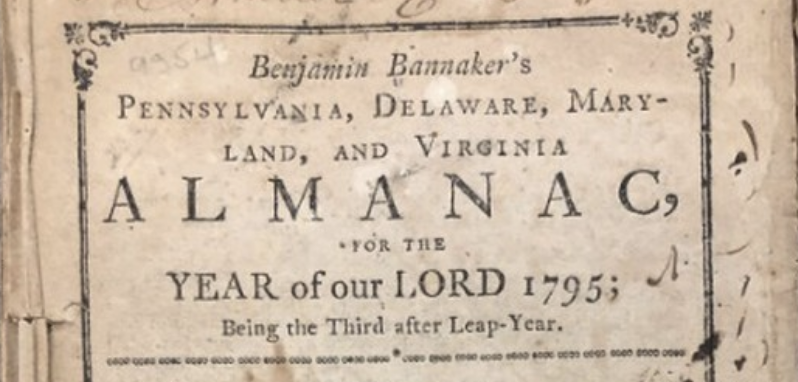
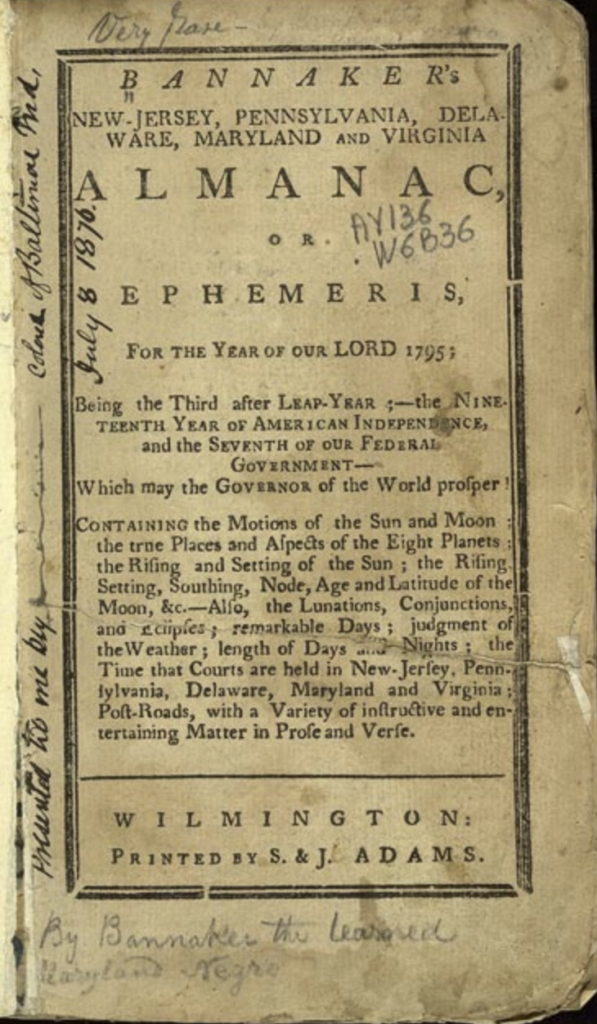
One of the most important accomplishments of Benjamin Banneker was the publication of his almanacs. Between 1792 and 1797, Banneker produced a series of almanacs that contained scientific information, calendars, weather predictions, astronomical calculations, and practical advice for everyday life.
During the eighteenth century, almanacs were extremely valuable because they provided important information that people relied on throughout the year. Farmers, merchants, sailors, and families used almanacs to plan their daily activities, farming schedules, and travel.
Banneker’s almanacs became widely respected because of the accuracy of his calculations and the quality of his scientific observations. His work helped establish him as one of the most recognized African American intellectuals of early America.
What Is an Almanac?
An almanac is an annual publication containing useful information about the calendar year. In colonial America, almanacs were among the most popular and widely read books because they combined science, weather, astronomy, and practical advice into one resource.
Typical almanacs included:
- Calendar dates
- Sunrise and sunset times
- Moon phases
- Weather forecasts
- Tides and seasonal changes
- Farming advice
- Astronomical charts
- Historical information and essays
People often depended on almanacs because there were no modern weather services, internet forecasts, or digital calendars. Almanacs helped communities organize farming, travel, religious events, and trade.
Years Benjamin Banneker Published His Almanacs
Benjamin Banneker published almanacs for six consecutive years:
- 1792
- 1793
- 1794
- 1795
- 1796
- 1797
These publications were distributed throughout the Mid-Atlantic region and gained attention for their scientific accuracy.
The almanacs were especially significant because they were created by an African American scholar during a period when many people believed Black Americans were incapable of advanced intellectual work. Banneker’s success challenged those racist assumptions and earned admiration from abolitionists and scientists alike.
Weather Predictions
One of the most practical sections of Banneker’s almanacs involved weather forecasting. Farmers relied heavily on weather predictions to decide when to plant crops, harvest food, and prepare for seasonal changes.
Although eighteenth-century forecasting methods were less advanced than modern meteorology, Banneker used careful observation of nature, seasonal patterns, and astronomical events to make predictions about rainfall, storms, and climate conditions.
His weather information helped rural communities prepare for:
- Planting seasons
- Harvest schedules
- Winter conditions
- Storms and changing temperatures
Because agriculture was central to colonial life, accurate weather information was considered extremely valuable.
Farming Information
Banneker’s almanacs also included practical farming advice for agricultural communities. Since most people in colonial America depended on farming for survival and income, almanacs served as important planning tools.
The farming sections often focused on:
- Best planting periods
- Seasonal weather patterns
- Harvest timing
- Lunar cycles related to agriculture
- Tips for managing crops and livestock
Farmers used this information to improve productivity and prepare for seasonal challenges. Banneker’s knowledge of astronomy and seasonal cycles helped make his farming advice more reliable.
Astronomy Charts and Scientific Calculations
Astronomy was one of the most impressive parts of Banneker’s almanacs. He carefully calculated the positions of stars, planets, the moon, and eclipses using mathematics and observation.
His almanacs included:
- Solar eclipse predictions
- Lunar eclipse predictions
- Moon phases
- Planetary movements
- Astronomical tables
These calculations required advanced mathematical knowledge and scientific skill. At the time, predicting eclipses was considered highly sophisticated work because it depended on precise measurements and understanding celestial motion.
Banneker’s astronomy charts demonstrated that he possessed abilities equal to many formally trained scientists of the era.
Cultural and Historical Importance
Banneker’s almanacs became symbols of intellectual achievement and racial progress. They proved that African Americans could excel in science, mathematics, and publishing despite widespread discrimination and limited educational opportunities.
His publications were also important because they combined practical knowledge with scientific learning. They made astronomy and mathematics accessible to ordinary people while helping communities manage daily life.
Today, Banneker’s almanacs are remembered as important historical documents that reflect both scientific achievement and the struggle for equality in early American history.