

Close Menu

Subscribe to Updates

Get the latest creative news from FooBar about art, design and business.

What's Hot

Calendar

The Wooden Clock

Plan of Washington DC

Facebook X (Twitter) Instagram
Benjamin Banneker Historical SocietyBenjamin Banneker Historical Society
Facebook X (Twitter) Instagram
  • Home
  • Biography

    Timeline

    Early Life

    Education and Self-Teaching

    How Benjamin Banneker Learned: Timeline

    Later Life of Benjamin Banneker

  • Legacy

    Benjamin Banneker’s Fight for Equality

    The Survey of Washington, D.C.

    Cultural and Historical Importance of Benjamin Banneker’s Scientific Discoveries

    The Legacy of Benjamin Banneker Today

    The 1791 Letter to Thomas Jefferson

  • Scientific Achievements

    The Survey of Washington, D.C.

    Almanacs

    Wooden Clock

    Astronomy and Mathematics

    What was Benjamin Banneker famous for?

  • Civil Rights Movement

    Benjamin Banneker and Frederick Douglass

    Benjamin Banneker and the Civil Rights Movement

  • Gallery

    Calendar

    The Wooden Clock

    Plan of Washington DC

    Benjamin Banneker Family Tree

  • About Us

    About Us

Benjamin Banneker Historical SocietyBenjamin Banneker Historical Society
You are at:Home»Fight Against Slavery and Equality»The 1791 Letter to Thomas Jefferson
Fight Against Slavery and Equality

The 1791 Letter to Thomas Jefferson

Facebook Twitter Pinterest LinkedIn Tumblr Email

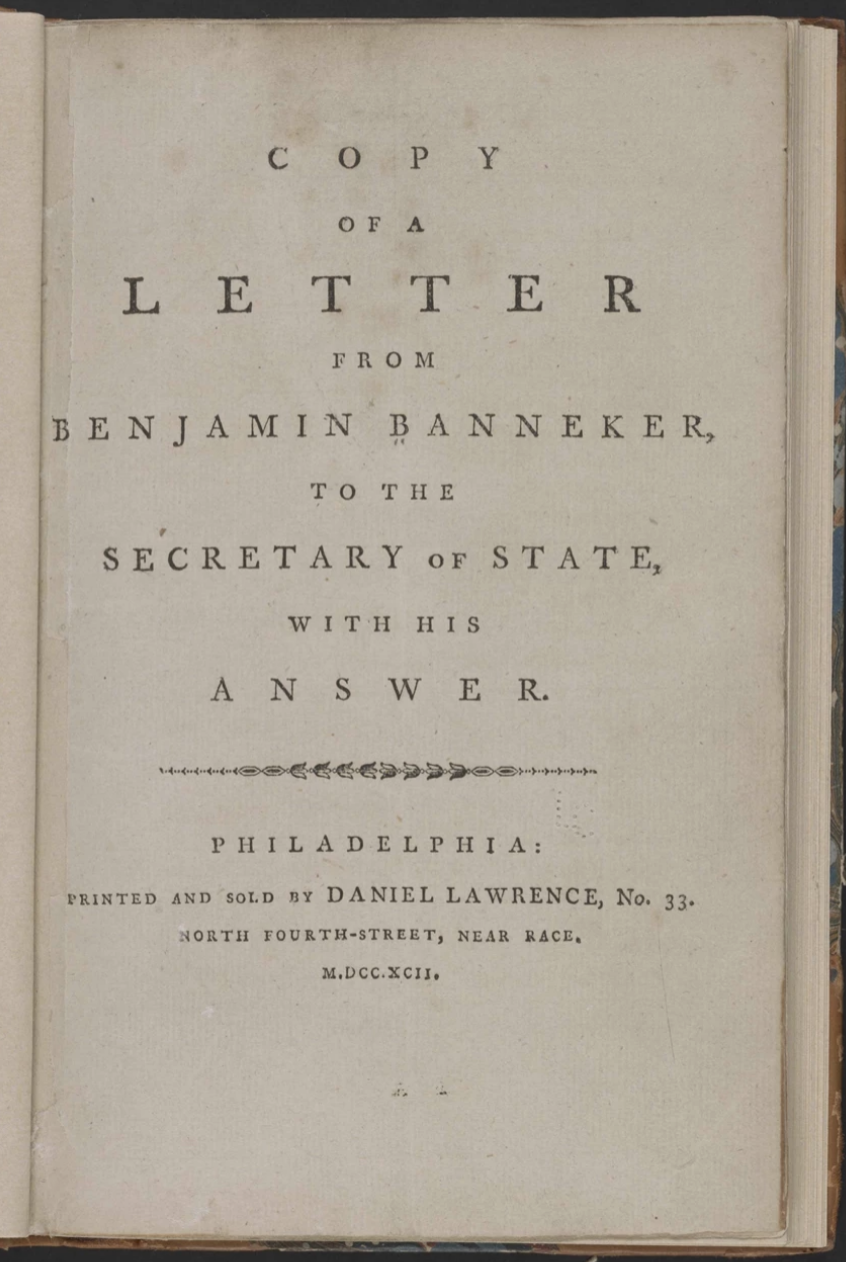
Banneker’s most famous act of protest was his letter to Thomas Jefferson on August 19, 1791. Jefferson had written the Declaration of Independence, but he also enslaved over 100 people and had recently published Notes on the State of Virginia, where he speculated that Black people were inherently inferior to white people in both body and mind.

Knowing this, Banneker crafted a letter that was polite but razor-sharp. He didn’t just ask for freedom; he strategically dismantled Jefferson’s logic:

  • Holding up a mirror to the Declaration: Banneker quoted Jefferson’s own words back to him, reminding him of the line: “We hold these truths to be self-evident, that all men are created equal.” He pointed out the staggering hypocrisy of holding such a “noble” view while simultaneously holding thousands of people in “groaning servitude.”
  • Using the American Revolution as an analogy: Banneker cleverly compared the plight of enslaved Black people to the tyranny the American colonists felt under the British Crown. He reminded Jefferson how much the colonists valued their own liberty, asking how they could justify denying that exact same liberty to others.
  • Providing physical evidence: Along with the letter, Banneker enclosed a handwritten copy of his upcoming astronomical almanac. He used his own calculations as living proof to refute Jefferson’s public claims about Black intellectual inferiority.
Share. Facebook Twitter Pinterest LinkedIn Tumblr Email

Related Posts

Timeline Infographic

Who was Benjamin Banneker?

Benjamin Banneker’s Fight for Equality

Editors Picks

Timeline Infographic

Who was Benjamin Banneker?

The Legacy of Benjamin Banneker Today

The 1791 Letter to Thomas Jefferson

Top Reviews
Advertisement
Demo
© 2026 ThemeSphere. Designed by ThemeSphere.

Type above and press Enter to search. Press Esc to cancel.