

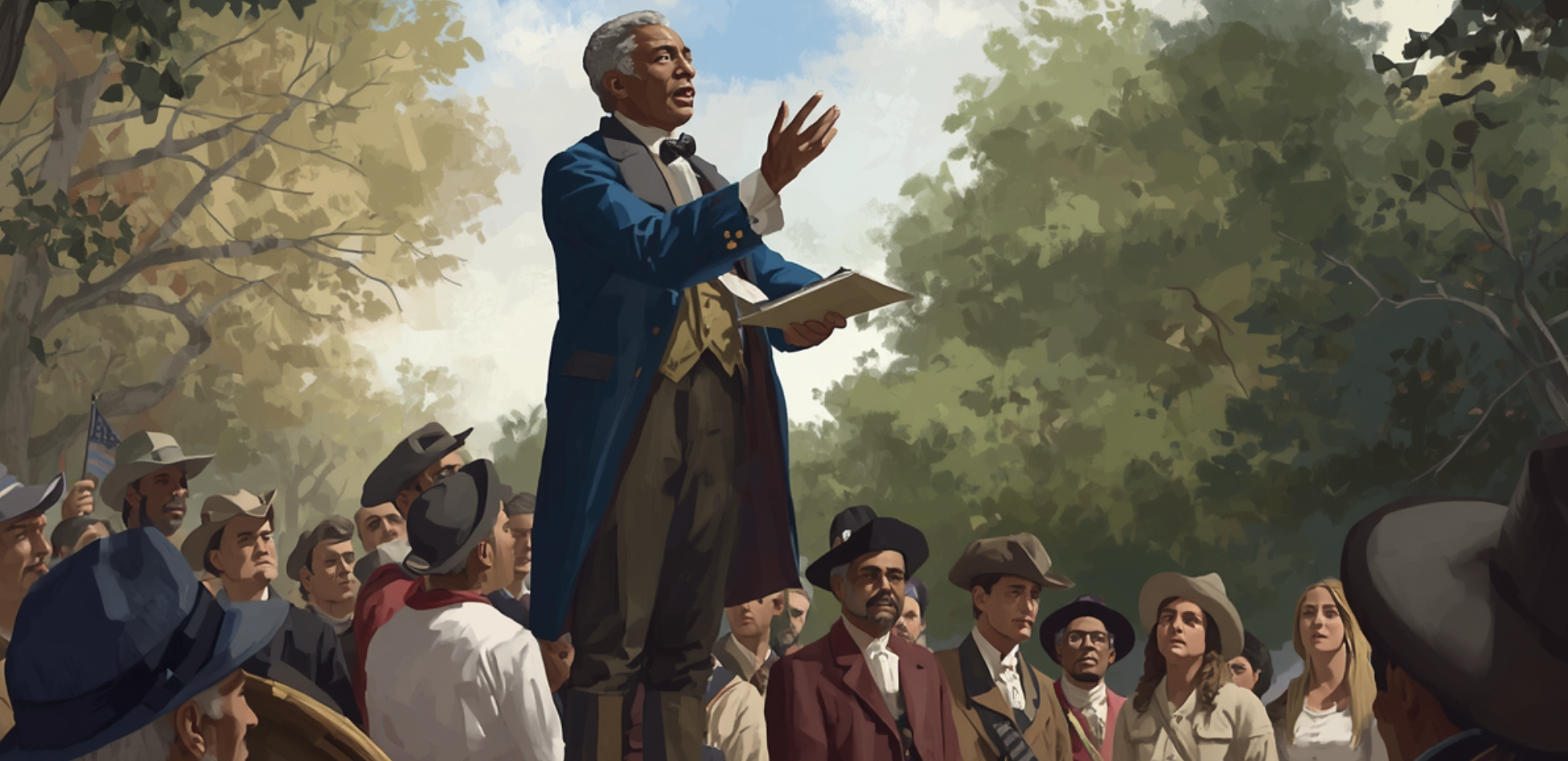
Benjamin Banneker is famous for his remarkable achievements as a self-taught African American intellectual during the late 18th century. Living as a free Black man in Maryland during a time of widespread slavery, his success across multiple scientific and political arenas made him a historic figure.
His legacy rests on four main achievements:
1. Publishing Highly Accurate Almanacs
From 1792 to 1797, Banneker calculated and published a series of annual regional almanacs. Teaching himself advanced mathematics and astronomy, he precisely calculated the ephemerides—the predicted daily positions of the sun, moon, and planets.
His books included tide tables, weather forecasts, and medical data. Abolitionist societies actively distributed his almanacs to provide undeniable, public proof of the intellectual capabilities of Black people, directly challenging pro-slavery arguments of racial inferiority.
2. Direct Correspondence with Thomas Jefferson
In 1791, Banneker sent a manuscript copy of his first almanac to Thomas Jefferson, who was then the U.S. Secretary of State. Accompanying it was a powerful, eloquent letter challenging Jefferson’s deeply hypocritical stance on race.
Banneker famously quoted the Declaration of Independence back to its author, urging Jefferson to look past “narrow prejudices” and recognize that Black people possessed equal mental and moral capacities. Jefferson replied respectfully, acknowledging Banneker’s talents and forwarding the almanac to the French Academy of Sciences.
3. Surveying the Borders of Washington, D.C.
In 1791, Banneker was hired to assist Major Andrew Ellicott in surveying the original 10-mile-square boundary of the new federal capital, Washington, D.C. Banneker worked in the field observatory, using delicate astronomical instruments to maintain precise calculations based on the stars, ensuring the boundaries were accurately mapped out.
4. Activist Against Slavery
Banneker’s activism against slavery is one of the most significant reasons he is remembered today. Rather than just being a quiet scholar, he used his public platform, his scientific talents, and his personal voice to directly confront the foundational contradictions of the young United States.